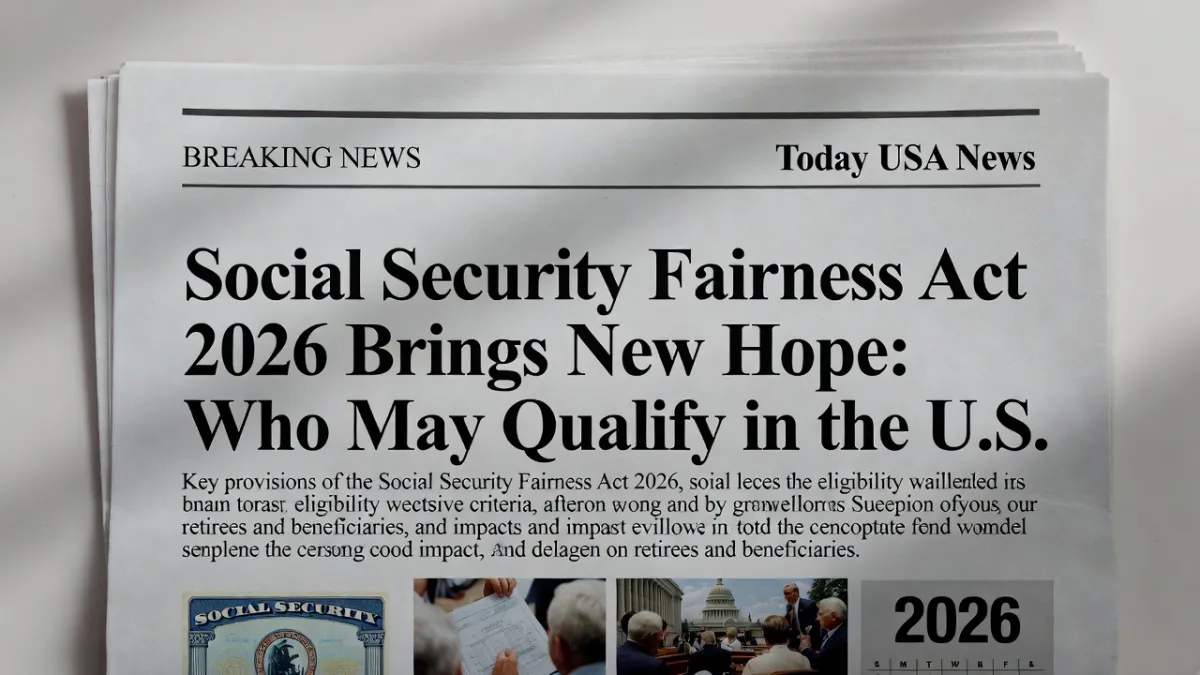
The Social Security Fairness Act 2026 has returned to national attention as lawmakers debate long-standing rules that reduce benefits for certain retired public employees. For millions of Americans who have spent their careers in public service, this discussion is not theoretical. It directly affects their monthly income, financial stability, and ability to manage rising living costs during retirement.
Why the Social Security Fairness Act 2026 Matters
At the center of the proposal are two provisions that have faced criticism for decades: the Windfall Elimination Provision and the Government Pension Offset. These rules reduce Social Security benefits for people who also receive pensions from jobs that did not pay into Social Security. Many teachers, police officers, firefighters, and municipal workers fall into this category. They argue that the reductions are unfair, especially when they earned Social Security credits through other jobs.
How WEP and GPO Reduce Benefits
The Windfall Elimination Provision lowers a worker’s own Social Security benefit if they receive a public pension from non-covered employment. The Government Pension Offset affects spousal and survivor benefits, often cutting them significantly or eliminating them entirely. In real life, this has meant that retirees receive far less than they expected after contributing to Social Security through part-time, seasonal, or second careers.
यह भी पढ़े:
 IRS Tax Refund 2026 Guide: Processing Timelines, Key Rules, and What Taxpayers Should Expect
 Rising Costs Increase the Urgency
Inflation has made this issue more pressing. Housing, healthcare, and prescription drug costs continue to rise, putting pressure on fixed incomes. For many retirees, losing even a few hundred dollars per month can change daily decisions about medical care, savings, or basic expenses. Supporters of the Act say reform is overdue and necessary to protect retirement dignity.
What Could Change If the Act Passes
If enacted, the Social Security Fairness Act 2026 would remove or reduce WEP and GPO penalties. This could lead to recalculated benefits for affected retirees, including spouses and surviving spouses. The increase would vary from person to person, but some households could see meaningful monthly improvements that reduce reliance on savings.
Challenges and Ongoing Debate
Despite bipartisan support, the proposal faces financial concerns. Critics worry about added strain on the Social Security trust fund, which already faces long-term funding challenges. Supporters argue that fairness should not be delayed simply because reform is complex. Some lawmakers suggest phased implementation as a compromise.

What Retirees Should Expect Next
Even if the Act passes, changes would not happen overnight. The Social Security Administration would need time to update systems and notify beneficiaries. Younger public employees are also watching closely, as the outcome could influence confidence in public service careers and long-term retirement planning.
Disclaimer:
This article is for informational purposes only. The Social Security Fairness Act 2026 has not been passed into law at the time of writing. Any changes to Social Security benefits will depend on final legislation and official implementation by the Social Security Administration. Readers should consult official U.S. government sources or qualified financial professionals for personalized advice.